Telecom Infrastructure Suppliers in Nigeria
Businesses looking for telecom infrastructure suppliers in Nigeria are often trying to solve a larger problem than buying one piece of equipment. A new office, multi-site company, ISP deployment, campus or communications project may require networking, fiber, wireless, voice, physical infrastructure and power systems that have to work together.
That makes supplier selection important. The right supplier should be able to understand the deployment, identify compatible equipment, account for expansion and explain what is included in the quotation. This guide covers the infrastructure itself, the equipment categories involved, how requirements change by project type, what costs to expect and what to check before placing an order.
TL;DR
- Telecom infrastructure is broader than routers and switches. It can include fiber and transmission equipment, network hardware, wireless systems, voice and VoIP equipment, racks and cabling, power and backup systems, and supporting infrastructure.
- Start with the project requirement rather than a product model. Define users and devices, locations, bandwidth, fiber distances, PoE endpoints, voice requirements, existing equipment and expected growth before asking for a quotation.
- For larger deployments, check compatibility across the complete system. A fiber cable, optical transceiver and switch port must match in speed, fiber type, wavelength, connector and distance. PoE equipment also has to match the powered devices and available power budget.
- The cheapest equipment quotation is not necessarily the cheapest project. Optics, cabling, racks, power, installation, configuration, testing, transport and support can materially increase the final cost.
- A good supplier should be able to supply the required equipment and help you select compatible specifications. For projects requiring installation or commissioning, confirm those services before approving the quotation.
- RapidBTS sells networking, fiber, wireless and business communication equipment and delivers across Nigeria, making it suitable for projects that require several related equipment categories.
What Is Telecom Infrastructure?
Telecom infrastructure is the combination of physical equipment, connectivity systems, network hardware, communication platforms, power systems and supporting components used to carry voice, data and other communications. It can range from the equipment connecting an office to the internet to the fiber, wireless, routing, switching and power infrastructure used in a larger communications network.
The exact infrastructure depends on the deployment. A 20-person office may need a router, switches, Wi-Fi, IP phones, cabling and backup power. A multi-site organization may additionally require fiber links, VPN-capable routing, managed switching, structured cabling and redundancy. An ISP or telecom operator can have a much broader architecture involving access, aggregation, transport, optical equipment and high-availability power systems.
What Equipment Does Telecom Infrastructure Include?

There is no universal telecom equipment list. The required hardware depends on whether the project is an office network, enterprise deployment, fiber backbone, wireless network, voice system, ISP access network or a combination of these. The categories below show the broader infrastructure ecosystem rather than limiting the definition to products sold by any one supplier.
Fiber optic and transmission equipment
Fiber infrastructure provides the physical path for high-capacity and long-distance connectivity. It can include single-mode or multimode fiber cable, fiber distribution frames, splice closures, termination boxes, patch panels, connectors, optical transceivers, media converters and fiber enclosures. Longer links may also use optical transport or wireless backhaul technologies depending on the terrain and network design.
The important point is that these components are selected as a system. An optical transceiver has its own speed, wavelength, fiber mode, connector and reach specifications. A supplier should therefore be given the distance, required speed, equipment at each end and installation environment rather than being asked simply for ‘fiber cable’.
Routers, switches and network infrastructure
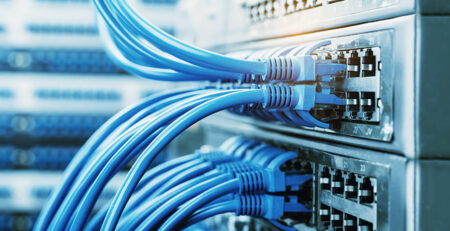
Routers provide connectivity between networks and can perform functions such as NAT, DHCP, VPN, firewalling, traffic control and multi-WAN failover depending on the model. Switches connect devices inside the LAN and may be unmanaged, managed, Layer 2, Layer 3, PoE-capable or equipped with SFP/SFP+ uplinks.
In larger deployments, network architecture may include access, distribution and core switching rather than a single switch. Port count, uplink capacity, VLAN support, PoE budget, redundancy and management requirements can matter more than the headline number of Ethernet ports. For a deeper explanation, see our guide on network equipment selection in Nigeria.
Wireless and radio infrastructure
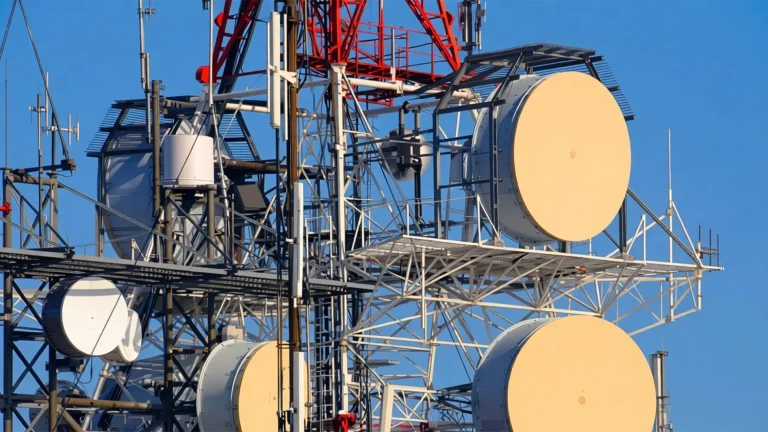
Wireless infrastructure can include indoor and outdoor access points, wireless controllers or management platforms, point-to-point links, point-to-multipoint systems, antennas, cellular routers and other radio equipment. These systems may provide office Wi-Fi, outdoor connectivity, building-to-building links, branch connectivity or last-mile access.
Wireless capacity is not determined by advertised Wi-Fi speed alone. Building layout, client density, channel environment, Ethernet uplink, PoE supply, antenna characteristics and required coverage all influence the design. A supplier should therefore size wireless infrastructure from a site or deployment requirement rather than recommending one high-specification access point for an entire large building.
Voice, VoIP and unified communications equipment
Business communications infrastructure can include IP PBX systems, IP phones, VoIP gateways, SIP connectivity, conference phones, video-conferencing equipment, headsets and interface modules for legacy telephone lines. These systems use the underlying network, so voice infrastructure and network infrastructure often need to be planned together.
Legacy interfaces can also affect the design. An organization moving from analog, GSM or E1/PRI connectivity to IP may need gateways or expansion modules rather than replacing every component at once. RapidBTS sells IP PBX systems ranging from compact business platforms to higher-capacity systems, so selection should be based on users, concurrent calls, trunks, interfaces and future growth.
Racks, cabinets, structured cabling and physical infrastructure
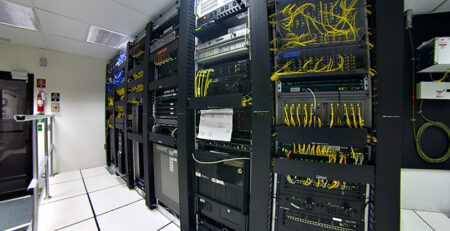
Telecom infrastructure also includes the physical layer that houses and connects equipment. Depending on the project, this can include network racks, wall-mounted cabinets, patch panels, cable managers, copper structured cabling, fiber enclosures, patch cords, power distribution and related installation accessories.
These components are easy to overlook when comparing equipment quotations. A switch may be inexpensive by itself, but the complete deployment may require rack space, patching, cable management, optics, power distribution and termination materials. For a professional installation, the physical infrastructure should be designed alongside the active equipment rather than added after the hardware has been selected.
Power, backup and environmental infrastructure
Telecom equipment depends on stable power. Depending on the site, supporting infrastructure may include UPS systems, batteries, DC power systems, rectifiers, surge protection, grounding, power distribution and backup generation. Outdoor or equipment-room deployments may also require attention to cooling, ventilation, moisture, dust and physical protection.
Power should be treated as part of the availability design, not an unrelated facilities issue. A network with redundant links but no power backup can still experience a complete outage. For critical deployments, the supplier and installer should understand equipment power draw, expected runtime, backup source, surge protection and environmental conditions.
What Telecom Infrastructure Does Different Deployments Need?
The same equipment category can be appropriate in several environments, but the required specifications change significantly. The best way to avoid overbuying or underbuilding is to start with the deployment and then work down to the equipment.
| Deployment | Typical infrastructure | What matters most | Common mistake |
|---|---|---|---|
| Small office | Router, switch, Wi-Fi, IP phones, cabling, UPS | Port count, internet throughput, coverage, voice requirements | Buying too little capacity or ignoring PoE |
| Medium business | Business router/firewall, managed switches, APs, PoE, VoIP, structured cabling | VLANs, PoE budget, uplinks, VPN, scalability | Treating every network device as interchangeable |
| Enterprise / multi-site | Routing/security, managed switching, fiber or high-speed links, wireless, VoIP, redundancy | Segmentation, WAN, high availability, monitoring, capacity | Designing each site independently without considering the WAN |
| ISP / network operator | Fiber/access, optical equipment, routing, aggregation, backhaul, power | Optical budget, subscriber capacity, redundancy, transport capacity | Buying access equipment without planning aggregation and backhaul |
| Hotel / campus | Core/distribution/access network, Wi-Fi, PoE, voice, fiber, CCTV connectivity | Client density, coverage, segmentation, uplinks, power | Using a flat network or relying on one access point per area |
How to Choose a Telecom Infrastructure Supplier in Nigeria
1. Technical expertise
A supplier should be able to ask sensible questions about your network, communications requirements, interfaces, distances and expansion plans. If the recommendation changes after you reveal one important specification, the original recommendation may have been too generic.
For larger deployments, put these requirements into the quotation or statement of work. It is much easier to resolve responsibility for delivery, configuration, testing and warranty before payment than after the equipment has been installed.
2. Equipment compatibility
Ask the supplier to confirm that proposed routers, switches, optics, access points, phones, gateways and other components work together. This is particularly important for fiber transceivers and PoE equipment.
For larger deployments, put these requirements into the quotation or statement of work. It is much easier to resolve responsibility for delivery, configuration, testing and warranty before payment than after the equipment has been installed.
3. Product authenticity and warranty
Confirm the exact model, condition, warranty coverage and documentation. For business-critical hardware, establish who handles warranty claims and what support is available after delivery.
For larger deployments, put these requirements into the quotation or statement of work. It is much easier to resolve responsibility for delivery, configuration, testing and warranty before payment than after the equipment has been installed.
4. Availability and delivery
For project work, a product being shown online does not automatically mean it is available when you need it. Confirm stock, expected delivery time and whether all components can arrive together before scheduling installation.
For larger deployments, put these requirements into the quotation or statement of work. It is much easier to resolve responsibility for delivery, configuration, testing and warranty before payment than after the equipment has been installed.
5. Installation and configuration
If the project needs rack installation, fiber termination, switch configuration, PBX setup, testing or commissioning, establish whether the supplier provides those services or whether another contractor will handle them.
For larger deployments, put these requirements into the quotation or statement of work. It is much easier to resolve responsibility for delivery, configuration, testing and warranty before payment than after the equipment has been installed.
6. After-sales support
Ask who will help if a device fails, a configuration needs changing or an expansion is required. The supplier’s ability to support the equipment can matter more than a small difference in initial purchase price.
For larger deployments, put these requirements into the quotation or statement of work. It is much easier to resolve responsibility for delivery, configuration, testing and warranty before payment than after the equipment has been installed.
How Much Does Telecom Infrastructure Cost in Nigeria?
There is no useful single price for telecom infrastructure because the term covers everything from a small office router and switch to fiber backbones, managed enterprise networks, voice systems and supporting power infrastructure. Cost is driven by the specifications and scale of the deployment.
Current Nigerian online listings reviewed for this guide show how wide the equipment range can be. Examples included business routers around ₦170,000–₦413,000, a 16-port managed PoE switch around ₦190,000, higher-end managed switches around ₦1.1 million and above, and fiber-management hardware around ₦285,000. These are individual listed-product examples, not market averages, and prices can change with exchange rates, stock and model availability.
| Category | Indicative examples | Main price drivers |
|---|---|---|
| Routers | About ₦100,000+ for business-class models; higher-end hardware can be substantially more | WAN interfaces, routing throughput, VPN, firewall, redundancy |
| Network / PoE switches | About ₦60,000+ for compact PoE models; several hundred thousand for managed business models; enterprise models can exceed ₦1 million | Port count, PoE budget, management, Layer 3, uplinks |
| Optical transceivers | About ₦28,000–₦57,000 for several current 1.25G–40G examples; specialist optics can cost far more | Speed, distance, wavelength, fiber mode, compatibility |
| IP PBX | About ₦290,000+ for some compact systems; larger systems can exceed ₦800,000–₦1 million | Users, concurrent calls, trunks, interfaces, expansion |
| Fiber cable and infrastructure | Hundreds of thousands of naira for some 1km cables; high-core-count cable can reach several million naira | Core count, fiber type, construction, distance, installation |
| Racks / physical infrastructure | Varies widely by rack size, enclosure type and accessories | Capacity, mounting, cable management, power and environmental requirements |
RapidBTS’s current catalogue provides useful reference points: examples include a 1.25Gbps 20km single-mode SFP at ₦28,000, a 10Gbps 300m multimode SFP+ at ₦39,000, a 10Gbps 10km single-mode SFP+ at ₦51,000, compact PoE switches from roughly ₦63,000, and larger managed PoE switches ranging into seven figures. Its IP PBX catalogue also spans compact systems around ₦290,000 and larger platforms above ₦800,000. Check the live catalogue before purchase because prices and availability change.
What Costs Are Often Missing From a Telecom Equipment Quote?
The hardware price is only one part of many telecom projects. A quotation that looks cheaper can become more expensive once the components needed to install and operate the equipment are added.
Depending on the project, ask whether the quotation includes optics, patch cords, connectors, rack accessories, power supplies, UPS capacity, cabling, fiber termination, splicing, configuration, testing, commissioning, transportation, installation and post-installation support. For fiber work especially, installation and testing can be significant relative to the cable itself.
- Optical transceivers and compatible modules
- Patch panels, fiber enclosures and termination materials
- Patch cords and structured cabling
- Racks, shelves, cable management and power distribution
- UPS, batteries and surge protection
- Installation and configuration
- Fiber splicing and link testing
- Transportation and site logistics
- Licensing or subscriptions where applicable
- Maintenance and technical support
What Should You Tell a Supplier Before Requesting a Quote?
Give the supplier enough information to select equipment rather than asking for a generic telecom setup. The more specific the requirement, the less likely you are to receive a quotation built around assumptions.
- Project type: new deployment, expansion, replacement or upgrade.
- Number of users and network-connected devices.
- Number of offices, branches, floors or buildings.
- Internet bandwidth and number/type of WAN connections.
- Number of IP phones, cameras, access points and other PoE endpoints.
- Required fiber distances, fiber type if known, core count and installation route.
- Required network speeds and uplink speeds.
- VLAN, VPN, security and remote-access requirements.
- Existing equipment that must remain in service.
- Expected growth over the next two to five years.
- Installation, configuration, testing and commissioning requirements.
- Delivery locations, project deadline and warranty/support expectations.
For larger projects, provide a floor plan, equipment schedule or simple network diagram if available. Even a basic drawing showing buildings, rooms, rack locations and link distances can help a supplier identify equipment and cabling requirements that would otherwise be missed.
Telecom Infrastructure Equipment Supplied by RapidBTS
RapidBTS sells networking, fiber, wireless and business communication equipment that can form parts of a telecom infrastructure deployment. Its range includes network switches, PoE switches, VPN routers, SFP modules, IP PBX systems and other telecom and networking equipment.
For example, a project that needs wired connectivity and powered network endpoints can use PoE network switches, while a deployment requiring secure multi-WAN connectivity can use a business VPN router.
For fiber links, the network equipment needs compatible optical modules. RapidBTS sells SFP and SFP+ modules covering different speeds, distances and fiber types.
Where the infrastructure also includes business telephony, RapidBTS supplies IP PBX systems and related communication equipment that can be integrated with the network.
For more detail on individual infrastructure layers, our guides on network equipment selection in Nigeria, fiber equipment requirements and routers and switches go deeper into those specific buying decisions.
RapidBTS is based in Ikeja, Lagos and its product pages state that it delivers across Nigeria. Its current product information also describes pre-purchase consultation and installation/setup support for relevant business communication equipment.
A Simple Telecom Supplier Evaluation Scorecard
If you are comparing several quotations, score suppliers on the same criteria instead of comparing the final price alone. This makes it easier to identify a quotation that is genuinely better rather than simply cheaper because it excludes important components or services.
| Factor | What to verify | Suggested question |
|---|---|---|
| Technical fit | Equipment meets the project specification | Why is this model appropriate for our requirements? |
| Compatibility | Components work with one another and existing infrastructure | Have you verified the interfaces, optics and PoE requirements? |
| Completeness | Quotation includes necessary accessories | What is excluded from this quotation? |
| Availability | Equipment is available on the required timeline | Which items are in stock and when can the rest arrive? |
| Installation | Configuration and commissioning responsibility is clear | Who installs, configures and tests the system? |
| Warranty | Coverage and claims process are clear | What happens if a component fails? |
| Support | Post-installation assistance is available | Who supports the system after deployment? |
| Scalability | Design can accommodate realistic growth | What would we need to add if the deployment doubles? |
Frequently Asked Questions
What does a telecom infrastructure supplier provide?
A telecom infrastructure supplier can provide equipment used for voice, data and connectivity projects, including routers, switches, fiber equipment, wireless hardware, IP PBX systems, VoIP gateways, racks, cabling and related components. The scope varies by supplier. Some focus on equipment supply, while others also provide design, installation, configuration, testing and maintenance.
What is the difference between telecom infrastructure and telecom equipment?
Telecom equipment refers to individual hardware such as a router, switch, fiber transceiver, IP PBX or wireless access point. Telecom infrastructure is the broader system in which that equipment operates, including connectivity, physical cabling, racks, power, backup systems and supporting components.
How do I know what telecom infrastructure my business needs?
Start with the services the network must support and document users, devices, locations, internet bandwidth, voice requirements, Wi-Fi coverage, PoE endpoints, fiber distances and expected growth. Also identify existing equipment that must remain. A supplier can use that information to recommend appropriate hardware instead of making assumptions from company size alone.
Can one supplier provide all the equipment for a telecom project?
Some suppliers can provide several major categories, but no supplier should be assumed to cover every part of a large telecom project. A project may involve equipment supply, fiber installation, structured cabling, civil work, power systems and specialist integration. Ask the supplier which parts it supplies directly and which services require a separate contractor or partner.
Do telecom infrastructure suppliers provide installation services?
Some do, but installation is not automatically included with equipment supply. Depending on the project, installation can involve rack mounting, structured cabling, fiber termination and splicing, switch and router configuration, PBX setup, testing and commissioning. Confirm these responsibilities and costs in writing before the project begins.
How much should I budget for telecom infrastructure in Nigeria?
There is no single useful budget because a small office and a multi-site telecom deployment have very different requirements. Equipment examples range from tens of thousands of naira for individual components to hundreds of thousands or millions for higher-capacity switches, fiber infrastructure, PBX systems and larger network equipment. The final project cost also depends on installation, cabling, optics, power, configuration, testing and support.
What should I check before buying telecom equipment?
Check the exact model, technical specifications, interfaces, compatibility, power requirements, capacity, warranty, availability and support. For fiber, verify speed, fiber mode, wavelength, connector and distance. For PoE, verify the supported standard, per-port power and total power budget. For larger deployments, also confirm VLAN, VPN, management, redundancy and scalability requirements.
Can telecom infrastructure be expanded as a business grows?
Yes, if expansion is considered during the original design. Spare switch ports, higher-capacity uplinks, additional fiber cores, rack capacity, scalable PBX systems and suitable power infrastructure can make future expansion easier. It is usually cheaper to build reasonable spare capacity into the physical infrastructure than to rebuild cabling or replace core equipment later.
Final Takeaway
The best telecom infrastructure supplier is not necessarily the company with the largest catalogue or the lowest unit price. The better choice is the supplier that can match equipment to the actual deployment, verify compatibility and provide a complete path from procurement to successful installation where required.
Before requesting a quotation, define the network, communication services, locations, device counts, fiber requirements, power needs and growth plans. Then compare suppliers on technical fit, completeness, availability, warranty, installation and support. That approach gives you a much better chance of buying infrastructure that works as a system instead of accumulating individual products that were never designed around the same requirements.